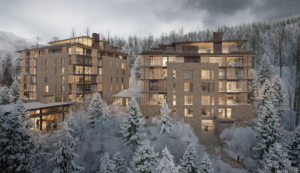
Explore the latest fact sheet for Four Seasons Private Residences Telluride, one of the most anticipated luxury residential developments in Colorado.
Located in Mountain Village with premier ski-in/ski-out access, Four Seasons Telluride offers an exceptional collection of private residences and hotel residences designed by Olson Kundig with interiors by Clements Design.
Owners enjoy legendary Four Seasons service, elevated wellness amenities, and an unmatched mountain lifestyle in one of the most exclusive resort markets in North America.
Private Residences
Hotel Residences

Four Seasons Telluride is a luxury resort and branded residential development in Mountain Village featuring 52 hotel rooms, 43 hotel residences, and 26 private residences with ski-in/ski-out access.

Leadership Through a Difficult Winter in Telluride
This past year has been one of the most emotionally difficult and professionally demanding periods I have experienced in our community.
In September, I was installed as President of the Telluride Association of REALTORS®. The very next day, I received notice from a colleague that a local group was petitioning to place a ballot question on the Town of Telluride’s November ballot to amend the Home Rule Charter. The proposed amendment was positioned as an anti-growth initiative, but one of its primary objectives was to derail the Lawson Hill project that included the future regional medical center.
For many of us, the medical center is not simply another development project. Our region’s current medical facility is operating under a lease that will not continue beyond the next couple of years, and our community has spent nearly a decade searching for a viable solution to provide long-term healthcare infrastructure for residents, visitors, and our workforce. At the same time, the ballot initiative sought to slow or prevent several other community projects, including workforce housing for teachers, improvements to the gondola station, and development proposals intended to support the long-term vitality of Telluride.
In response, a coalition of local business owners, community members, and organizations came together to provide factual information and encourage productive dialogue. I served as chair of that coalition, Neighbors for Telluride. It was an exhausting and emotional few months. The community became deeply divided, conversations became increasingly hostile, and many individuals on all sides experienced significant personal stress. I was personally the recipient of a great deal of criticism and negativity throughout the process.
Despite the tension, our coalition remained focused on facts, outreach, and one-on-one conversations. Ultimately, the ballot question was defeated, allowing the regional medical center project to continue moving forward. I remain grateful to everyone who dedicated their time, energy, and voices toward ensuring healthcare remains a priority in our region.
At the same time this ballot fight was unfolding, another major challenge was emerging within our community: the labor dispute between Telluride Ski & Golf and the ski patrol union.
Members of ski patrol approached community leaders and organizations seeking financial assistance for meeting facilitation and negotiation support. Negotiations between patrol and resort ownership had already been ongoing for more than a year regarding wages and compensation structure. Patrol members were seeking what they described as a livable wage and compensation more in line with comparable mountain resorts.
The situation highlighted a difficult reality: ski patrollers are highly trained professionals responsible for avalanche mitigation, mountain safety, emergency medical response, and guest protection, but they are not necessarily trained negotiators or labor strategists. Meanwhile, resort ownership held significant leverage within the negotiations.
As discussions continued to deteriorate, tensions escalated publicly. The possibility of a strike became increasingly likely, and ultimately ski patrol walked out for 12 days during peak winter season. The impact was immediate and devastating for most local businesses because they depend on winter tourism revenue.
At the same time, there were already broader concerns surrounding the long-term sustainability and infrastructure of the resort itself. Discussions throughout the community increasingly centered around deferred maintenance, aging lift infrastructure, operational costs, snowmaking expenses, and the future financial direction of the ski company. Public disagreements between resort ownership, local governments, and community leaders became more visible and increasingly contentious.
During the height of the dispute, local officials, who stated they were acting on their own accord and not in the roles of government officials, attempted to facilitate conversations and explore potential partnership ideas aimed at reopening the resort and stabilizing operations. Unfortunately, those efforts later became part of broader legal disputes and public accusations that only intensified community tensions and generated additional negative national media attention.
The result was months of negative press surrounding Telluride at a time when our economy depends heavily on tourism confidence and destination perception.
Then came one of the most difficult winters in recent memory. Snowfall was historically low. Chuck decided not to blow snow because he was in a dispute with the Mountain Village and did not want to pay the water rates. Warm temperatures and lack of snowpack forced operational challenges across the mountain, and the season ended early as terrain conditions deteriorated rapidly. Businesses that had already suffered through the ski patrol strike now faced shortened visitation and significant economic losses.
The effects extended beyond the mountain itself. Visitors canceled trips. Restaurants, retailers, lodging operators, and service providers experienced reduced revenue. Community morale suffered. Many businesses were still trying to recover when broader global economic uncertainty and international conflict further slowed consumer confidence and discretionary spending.
It felt like one difficult challenge layered on top of another.
And yet, despite everything, I remain hopeful.
As we move into summer, our community needs a strong tourism season. Local businesses need visitors returning. Families need stability. Employees need opportunity. And after such a difficult winter, many people simply need optimism again.
From a real estate perspective, the market itself remains remarkably stable. Inventory levels have improved, buyer activity continues, unemployment remains low nationally, and interest rates have stabilized into a healthier balanced market environment. While outside factors — including wildfire risk, economic uncertainty, and continued negative press — remain concerns, the underlying fundamentals of our region continue to show resilience.
This winter tested our community in many ways. It revealed fractures, frustrations, and vulnerabilities. But it also reminded me how deeply people care about this place and how important it is that we continue finding ways to work together, communicate respectfully, and focus on long-term solutions rather than division.
Telluride’s future depends on it.
Housing availability continues to be one of the most defining challenges across San Miguel County, and a recent county-led housing code update highlights just how complex—and consequential—this issue has become. With nearly half of the local workforce commuting more than 25 miles and an estimated need for 1,100 additional housing units by 2030, the county is actively examining how land-use regulations may be unintentionally limiting new housing development in unincorporated areas.
To address this, the county launched a comprehensive land use code audit and convened a Stakeholder Strategic Roundtable made up of property owners, developers, local workers, and infrastructure planners. Their goal: identify regulatory barriers that increase costs, slow approvals, or restrict housing types—and find ways to streamline the process while preserving community character. These housing policy discussions tie directly into current Telluride real estate market conditions, particularly around inventory and long-term value.
One of the most significant discussions centers around Colorado’s Proposition 123 “Fast Track” standards, which incentivize expedited review for housing projects that include affordable units. The county is currently on track to meet state deadlines, a key requirement for maintaining access to planning grants that help fund this work. Notably, stakeholders supported adjusting Area Median Income (AMI) thresholds upward—settling on 120% AMI for rentals and 200% AMI for ownership—to better reflect the realities of a rural resort economy like ours. For those considering buying a home in Telluride, understanding how housing policy shapes supply is an important part of long-term planning.
So why does this matter to Telluride buyers and sellers? Regulatory changes can influence Telluride home values, particularly as surrounding communities adjust housing density and approvals.
For sellers, housing policy directly affects land values, development potential, and long-term market stability. Regulatory changes that allow more housing density or faster approvals in surrounding areas can influence demand patterns, pricing pressure, and future inventory—especially for workforce and middle-income housing.
For buyers, particularly those investing long-term, these updates signal how the region is planning for sustainability. A healthy housing ecosystem supports the local workforce, strengthens the year-round economy, and protects the lifestyle that draws people to Telluride in the first place.
My local takeaway: this process isn’t about overdevelopment—it’s about thoughtful calibration. San Miguel County is attempting to balance housing needs with limited land, infrastructure constraints, and the preservation of community character. For anyone considering buying or selling in Telluride, understanding these policy shifts is essential. Real estate here has always been shaped as much by planning decisions as by natural beauty—and staying informed is part of protecting both your investment and our community’s legacy.
Telluride News – Jan. 30, 2026 – County continues housing code discussions
Luxury. Legacy. Lifestyle. Let’s find your place in Telluride.
Using MLS data, I analyzed real estate sales in 2025 compared to 2024 across the Town of Telluride, Mountain Village, and San Miguel County. Overall, the Town of Telluride and Mountain Village experienced a slight decline in both the number of transactions and total dollar volume, while the remainder of the County saw increases in both activity and volume over last year.
When looking at median sold prices—which better reflect typical values because they are less affected by ultra-luxury outliers—the median single-family home price in the Town of Telluride was $4,399,000, compared with $7,575,000 in Mountain Village.While median home values softened slightly in 2025, average price-per-square-foot actually increased for single-family and condominium sales in both Telluride and Mountain Village, signaling that updated, well-located properties are still commanding premium pricing.
| END OF YEAR 2024 | END OF YEAR 2025 | |||||
| # OF TRANSACTIONS | DOLLAR VOLUME | # OF TRANSACTIONS | DOLLAR VOLUME | % DIF | ||
| TELLURIDE: | ||||||
| Telluride Condominiums/Half Duplex | 42 | $137,352,150 | 51 | $132,809,000 | 21% | -3% |
| Telluride Deed-Restricted Condos/Half Duplex | 10 | $3,624,870 | 5 | $1,739,129 | -50% | -52% |
| Telluride Fractional Condominium/Half Duplex | 5 | $880,000 | 7 | $935,500 | 40% | 6% |
| Telluride Single Family Residential | 23 | $150,940,000 | 16 | $89,988,000 | -30% | -40% |
| Telluride Deed-Restricted Single Family Res | 0 | $0 | 0 | $0 | 0% | 0% |
| Telluride Improved Non-Residential | 4 | $10,379,250 | 4 | $6,705,000 | 0% | -35% |
| Telluride Vacant Residential | 5 | $9,590,000 | 1 | $1,237,500 | -80% | -87% |
| Telluride Vacant Mixed/Non-Residential | 0 | $0 | 2 | $5,300,000 | 100% | 100% |
| EOY | 89 | $312,766,270 | 86 | $238,714,129 | ||
| MOUNTAIN VILLAGE: | ||||||
| Mountain Village Condominiums/Half Duplex | 37 | $74,880,500 | 33 | $66,640,600 | -11% | -11% |
| Mountain Village Deed-Restricted Condos/Half Duplex | 9 | $7,438,000 | 2 | $1,525,000 | -78% | -79% |
| Mountain Village Fractional Condominium/Half Duplex | 93 | $13,624,500 | 87 | $11,013,350 | -6% | -19% |
| Mountain Village Single Family Residential | 24 | $242,227,456 | 24 | $217,492,500 | 0% | -10% |
| Mountain Village Deed-Restricted Single Family Res | 1 | $2,175,000 | 2 | $4,540,000 | 100% | 109% |
| Mountain Village Improved Non-Residential | 6 | $3,760,000 | 3 | $2,105,125 | -50% | -44% |
| Mountain Village Vacant Residential | 13 | $26,216,000 | 11 | $18,701,766 | -15% | -29% |
| Mountain Village Vacant Non-Residential | 0 | $0 | 0 | $0 | 0% | 0% |
| Mountain Village Deed-Restricted Vacant Non-Residential | 2 | $397,000 | 0 | $0 | -100% | -100% |
| EOY | 185 | $ 370,718,456 | 162 | $ 322,018,341 | ||
| TELLURIDE-MOUNTAIN VILLAGE | 274 | $683,484,726 | 248 | $560,732,470 | ||
| Remainder of COUNTY: | ||||||
| Aldasoro Single Family Homes | 7 | $41,664,320 | 3 | $24,935,000 | -133% | -67% |
| Aldasoro Deed-Restricted Homes | 2 | $3,750,000 | 0 | $0 | -100% | -100% |
| Aldasoro Vacant Residential | 3 | $4,390,000 | 2 | $4,650,000 | -50% | 6% |
| Aldasoro Deed-Restricted Vacant Residential | 0 | $0 | 2 | $775,000 | 100% | 100% |
| Ski Ranch Single Family Homes | 5 | $14,440,150 | 5 | $19,060,300 | 0% | 24% |
| Ski Ranch Vacant Residential | 2 | $1,655,000 | 1 | $1,100,000 | -100% | -50% |
| County Condominiums/Half Duplex | 4 | $4,099,000 | 4 | $3,795,000 | 0% | -8% |
| County Deed-Restricted Condos/Half Duplex | 0 | $0 | 2 | $750,000 | 100% | 100% |
| County Single Family Homes | 47 | $118,340,889 | 55 | $134,845,150 | 15% | 12% |
| County Deed-Restricted Single Family Home | 15 | $9,967,400 | 8 | $6,547,500 | -88% | -52% |
| County Improved Non-Residential | 2 | $806,000 | 1 | $315,000 | -100% | -156% |
| County Deed-Restricted Improved Non-Residential | 0 | $0 | 0 | $0 | 0% | 0% |
| County Vacant Residential | 35 | $31,211,500 | 30 | $12,774,300 | -17% | -144% |
| County Deed-Restricted Vacant | 1 | $125,000 | 1 | $220,000 | 0% | 43% |
| County Vacant Non-Residential/Mixed | 1 | $500,000 | 4 | $3,870,000 | 75% | 87% |
| 854 | $616,794,895 | 884 | $724,790,245 | 104% | 118% | |
This year marked a meaningful shift from a strong seller’s market toward a more balanced environment. Dated or less-desirable properties are taking longer to sell, while updated and thoughtfully designed homes continue to move quickly.
Interest in vacant land remains muted, largely due to high construction costs and associated development fees, which have led some owners and buyers to redirect plans to other markets. Mesa properties and ranches also slowed over the past few years as buyers explored alternatives across Colorado — though we are now seeing value recognition return in San Miguel County, bringing renewed interest to these lifestyle-driven properties.
It’s also important to recognize activity not fully captured in the MLS. Mountain Village’s Highline Residences project continues to advance, with 12 of 16 residences pending, totaling approximately $82,950,000 in list price volume. Meanwhile, the Four Seasons project has broken ground, with more than 10 presales reportedly under contract and completion anticipated within the next three years, though limited public data is available.
Overall, the sold data reflects a normalizing market with selective strength. New, high-end construction in both Telluride and Mountain Village continues to perform exceptionally well, reinforcing buyer demand for modern design, amenities, and turn-key mountain living.
Telluride News January 22, 2026 – Area Realtors Asses Telluride Real Estate Market
Luxury. Legacy. Lifestyle. Let’s find your place in Telluride.

Perched slope-side in the exclusive Cortina enclave, 230 Cortina Drive is a newly completed 3,848 sq ft ski-in/ski-out retreat that blends contemporary design with mountain luxury. Floor-to-ceiling glass, natural stone, and steel accents frame panoramic San Juan views and connect to the Sundance ski run. The home offers four ensuite bedrooms, two half baths, and an open-concept living space with a sleek fireplace and double glass walls opening to 475 sq ft of wraparound terraces. A chef’s kitchen, treehouse-style dining area, and proximity to the Mountain Village core make this a rare alpine escape.

The Four Seasons is breaking ground soon! Click below to view a detailed brochure of the project.